Check-up and diagnostics
Assessment of symptoms, examination of the tooth and, when needed, an X-ray to determine the extent of the problem.

When a tooth is at risk
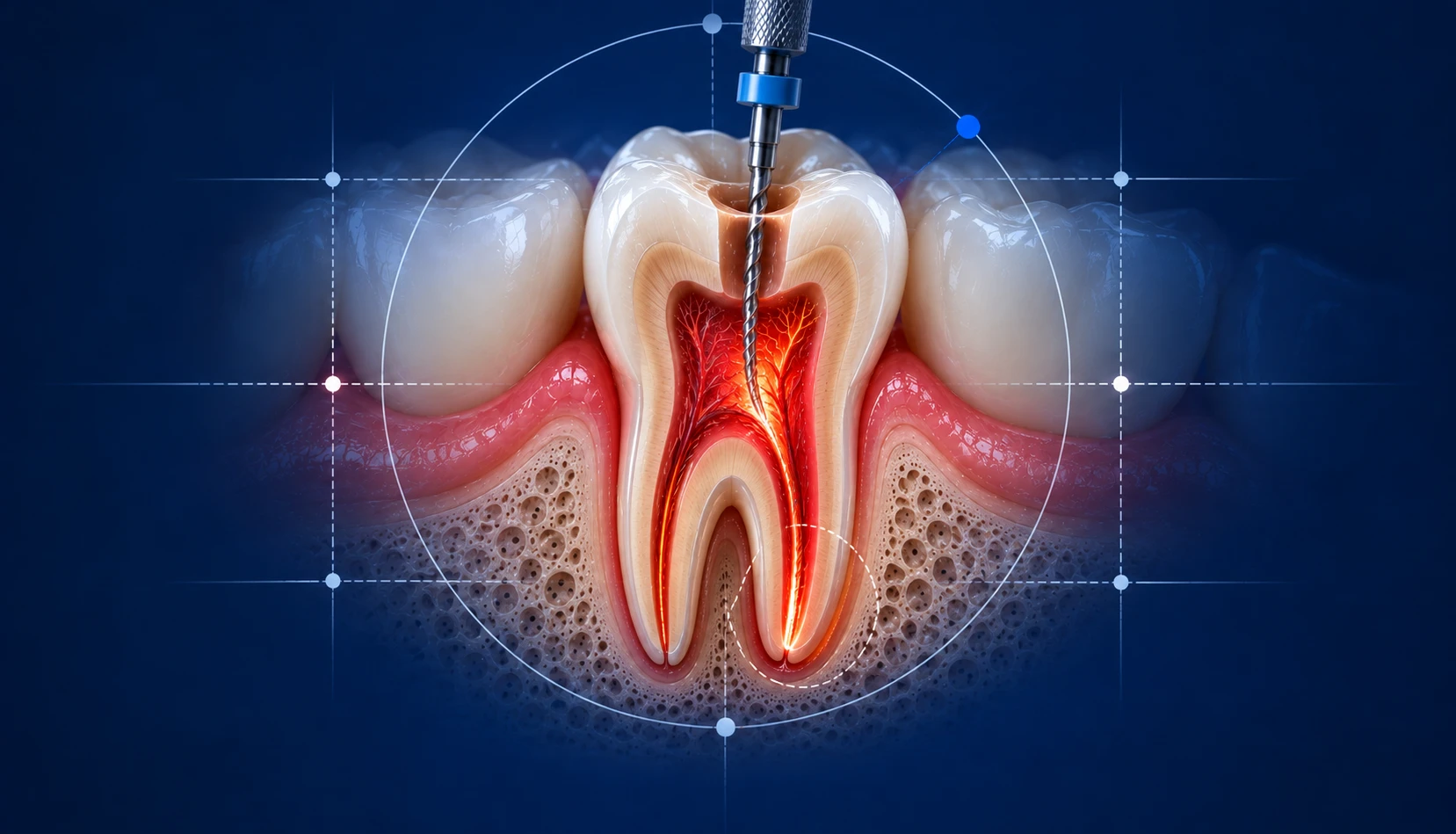
Beneath the outer layer of the tooth lies the pulp, a soft tissue containing nerves and blood vessels. When it becomes inflamed or infected, the cause can be deep decay, a crack or an injury to the tooth.
Endodontic treatment removes the damaged tissue, and the root canals are cleaned, disinfected and sealed. The goal is to remove the infection and save the natural tooth whenever possible.
Endodontic treatment helps save teeth whose interior is damaged or infected. Careful cleaning and disinfection of the root canals removes the source of the problem and makes it possible to keep the tooth.
Book a check-upSymptoms
What does the procedure look like?
The treatment is adapted to the condition of the tooth and the complexity of the canals.
Assessment of symptoms, examination of the tooth and, when needed, an X-ray to determine the extent of the problem.
Under local anaesthesia, the diseased pulp is removed, and the root canals are cleaned and disinfected.
The cleaned and shaped canals are filled with a suitable material to prevent micro-organisms from entering again.
The tooth is sealed with a filling or, when needed, a crown to restore its function and strength.
Saving the tooth
When possible, saving your own tooth is preferable to extracting it. Timely endodontic treatment can remove the source of infection and allow the tooth to keep taking part in normal chewing.
Frequently asked questions
The answers are general in nature and do not replace a check-up. For advice tailored to you, get in touch with the clinic.
The treatment is done under local anaesthesia, so you should not feel pain during the procedure. Mild sensitivity is possible for a few days afterwards.
Sometimes one visit is enough, and sometimes more are needed. It depends on the degree of infection, as well as the number and shape of the canals.
When possible, keeping your own tooth is an advantage, because it continues to take part in chewing and keeps the neighbouring teeth in position. It is not always possible, which we assess with a check-up and imaging.
After root canal treatment a tooth can be weakened, so it is often sealed with a filling and in some cases with a crown. Your dentist makes the recommendation according to the condition of the tooth.
The infection can spread to the surrounding tissue and bone, with stronger pain, swelling or an abscess. The earlier a tooth is treated, the greater the chance of saving it.
With a good restoration and good hygiene, a treated tooth can last for many years. Regular check-ups are important.
Endodontics
If you feel pain or suspect an inflamed tooth, a check-up is the first step towards the right solution. At the Radix clinic we will assess the condition of the tooth and suggest the appropriate treatment.